
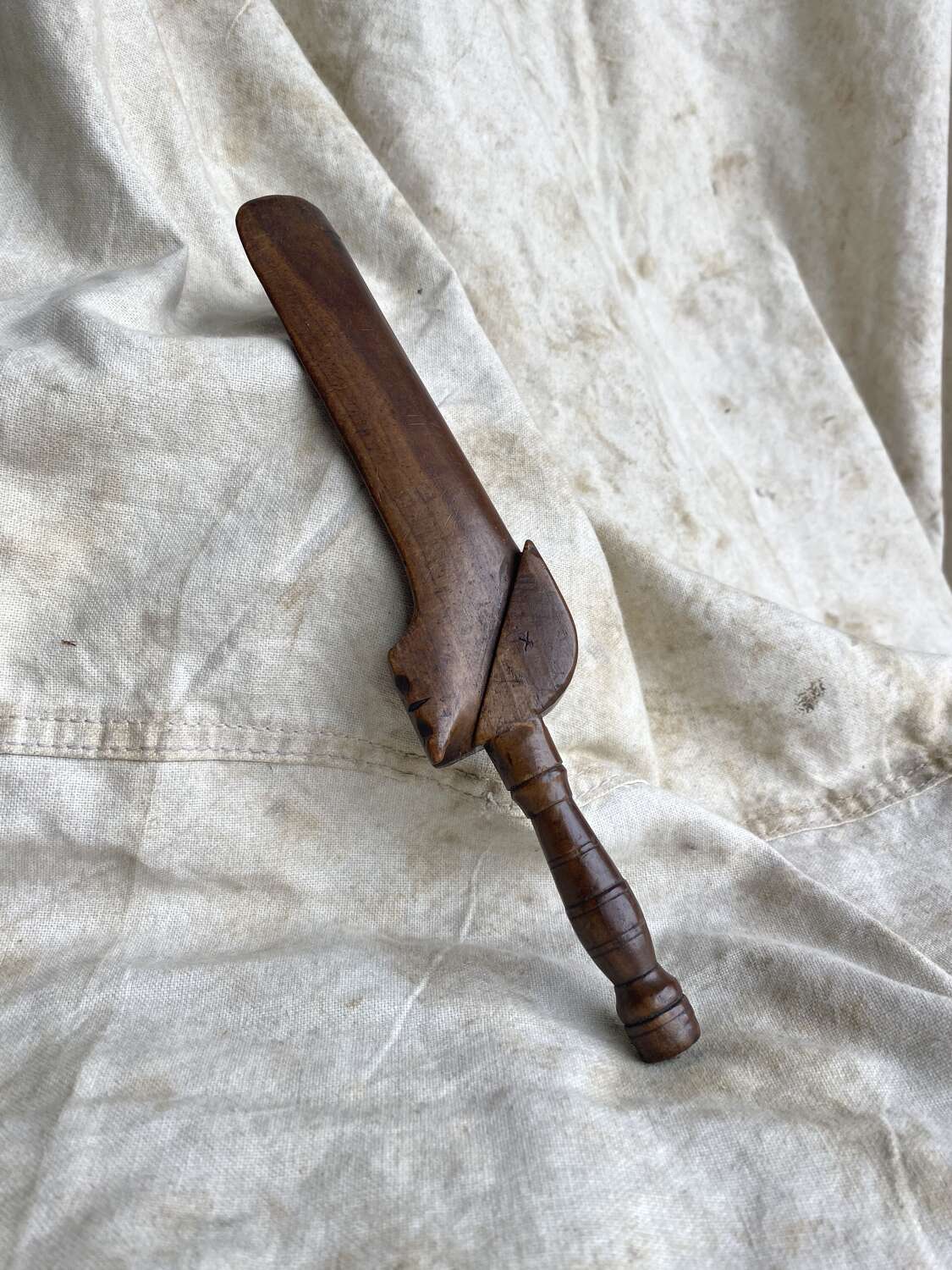


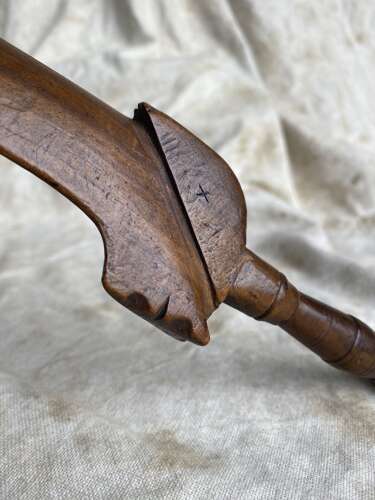
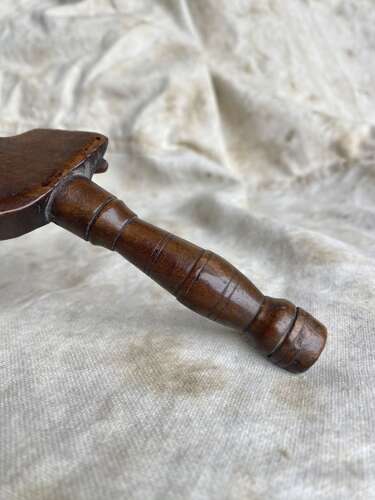
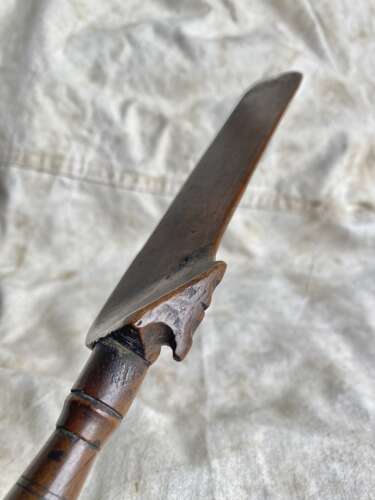

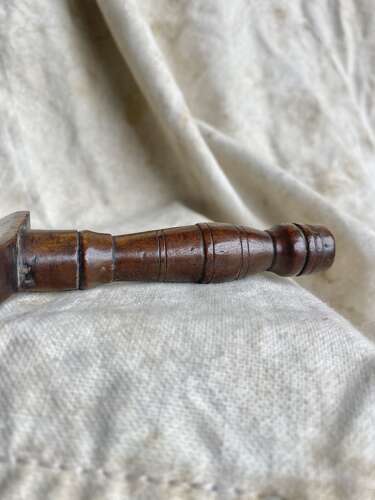
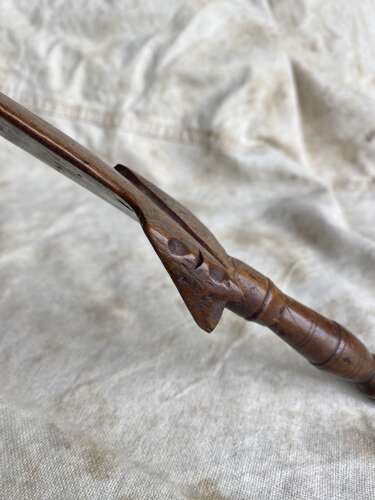
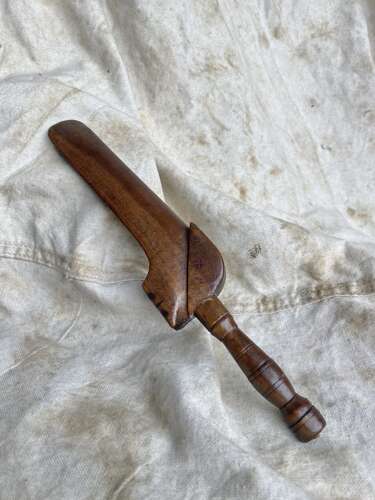
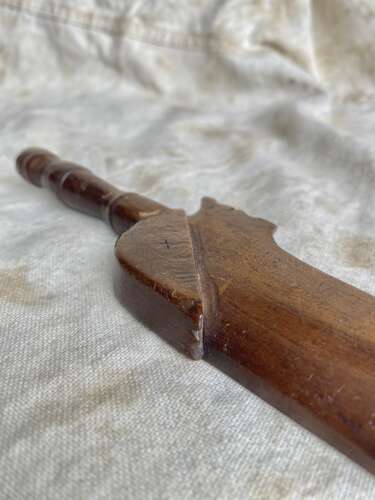
An antique early 19th century folk art fruitwood knitting sheath with apotropaic symbol
Code: 10410
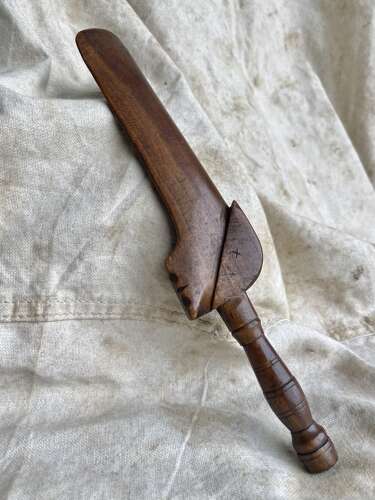
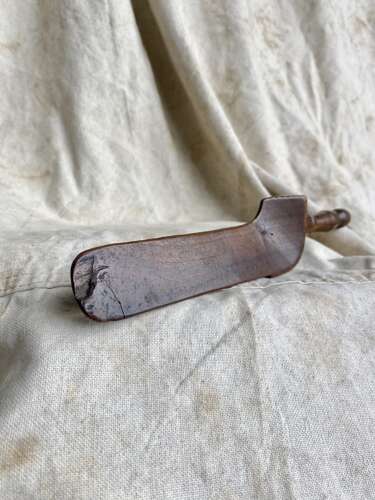
A carved antique English early 19th century, folk art fruitwood goose-wing knitting sheath.
Originally from North Yorkshire, and possibly carved in plum, this charming treen item was originally made to support a needle whilst knitting. The goose wing shape allowed the sheath or stick to be placed under the users armpit or even into their belt. The hole in the end of the turned shaft was used for inserting the knitting needle.
Generally these items were love tokens and made by men as a sign of their affections, and were then gifted to their sweethearts. Quite often decorated with various styles of carving, polka work, etc. It is common to find these knitting sheaths baring dates and initials.
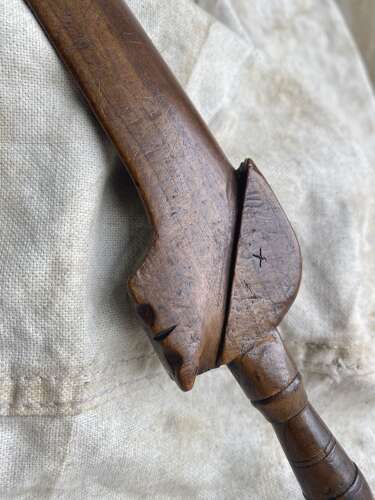
The rarer aspect of this particular example is the small carved ‘X’ to its front. The x mark is known as a apotropaic protection symbol or more commonly referred to as a ‘witch mark’. These protection symbols were common place within homes in England from around the 16th to the early 19th century.
Used to protect both inhabitants within the home and objects from witches and evil spirits.
The 'X' mark is one of earliest and most common types of apotropaic symbols found.
This makes for a wonderful reminder of the supernatural beliefs and folklore that were once common place across rural England.
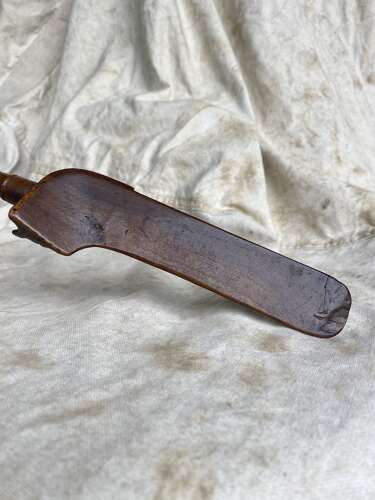
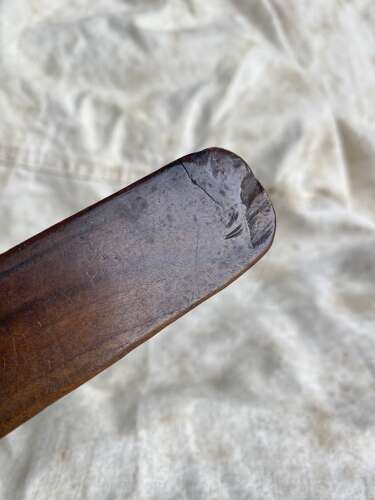
The sheath is found in untouched original condition, showing good colour and patina.
Some historic wear and tear as would be expected.
